Turn Night Shifts Into Your Cybersecurity Launchpad
Working nights or rotating shifts can feel lonely. While everyone else is sleeping or enjoying warm late-summer evenings, you might be at a hospital desk, a hotel front office, a factory floor, or in a patrol car watching the clock. But those quiet hours can become the start of something bigger.
Cybersecurity can be a strong fit for people who are used to nontraditional schedules. Many security operations teams need coverage outside standard business hours, and cybersecurity roles continue to show strong long-term growth. For people willing to train consistently, it can be possible to build toward a cyber career without quitting a current job.
At Applied Technology Academy, we specialize in instructor-led IT and cybersecurity training with hands-on labs and clear certification prep. We work with busy adults, including people on night shifts here in Florida and across the country. In this guide, we will walk through practical ways to use your schedule to your advantage, not as a barrier, and how to structure cyber training while working so it actually sticks.
What Is Cyber Training While Working Nights?
Cyber training while working nights means building cybersecurity skills around a nontraditional schedule. For night-shift and rotating-shift workers, that often means using short study blocks, recorded lessons, hands-on labs, certification prep, and flexible instructor-led training to make steady progress without leaving a current job.
Map Your Cyber Career Goals Around a Shift Schedule
Before you pick a course, get honest about why you want cybersecurity in your life. Your reasons might include:
- Higher income and long-term career growth
- More remote or flexible work options
- Mission-focused work, like protecting critical infrastructure or supporting DoD contracts
- A career that feels more stable when the economy feels shaky
Next, think about what kind of work fits your personality and schedule. Some roles include:
- SOC analyst, watching alerts and responding to issues
- Incident responder, helping contain and recover from attacks
- Penetration tester, trying to break into systems in a controlled way
- Security administrator, managing tools, accounts, and policies
- Cloud security engineer, protecting systems in the cloud
If you are still comparing cybersecurity roles, the NICE Cyber Career Pathways Tool can help you explore common work roles and see how different cyber jobs connect to skills and tasks.
Now tie those goals to a realistic timeline. If your work schedule is busy but predictable, use that window to plan your training path. You might:
- Use the next few weeks to plan and pick your training path
- Start formal training during your next manageable schedule block
- Focus on exam prep through the following months
- Begin a serious job search once you have training, labs, and certification progress to show
Our advisors at Applied Technology Academy can help you determine which certifications align with your background: maybe CompTIA Tech+ or Network+ if you are brand new to IT, or Security+, CySA+, PenTest+, or CISSP if you already have some experience. Put your plan in writing and match it to your actual pattern, whether you work 3x12s, 4x10s, or rotating nights. When the roadmap respects your schedule, it feels real, not like a wish.
Smart Time Management for Cyber Training While Working
Start with a simple weekly audit. For one week, pay attention to:
- Commute time
- Slow periods on night shift where study is allowed
- How long you need to unwind after work
- Family or home duties
- Sleep windows that you must protect
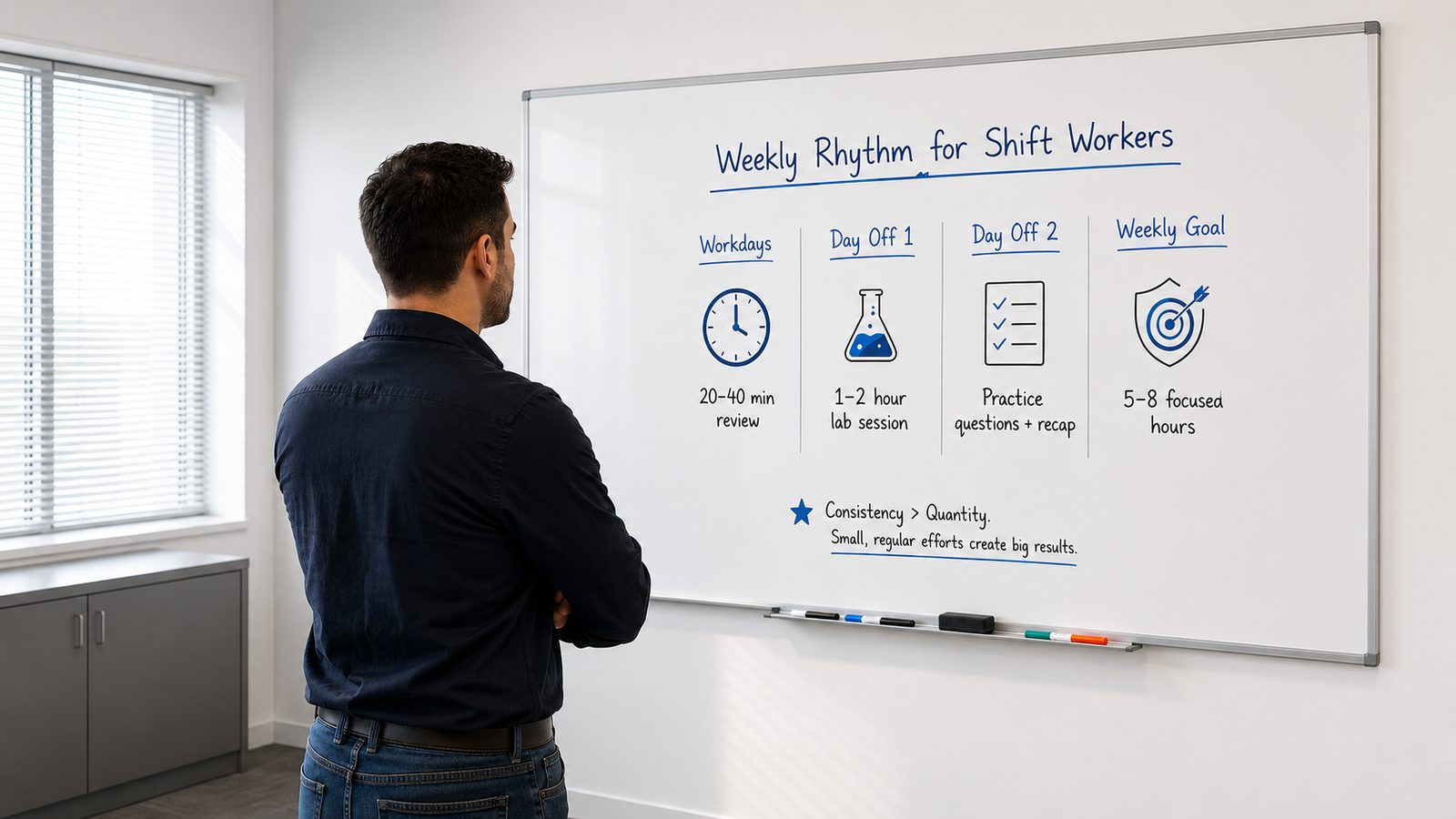
From there, build mini schedules. For example, if you work three night shifts in a row with two days off:
- On workdays, do 20 to 40 minutes of light review before work or on a meal break
- On the first day off, focus on a longer lab session, 1 to 2 hours
- On the second day off, do practice questions and recap notes
For rotating schedules that change every two weeks, pick a fixed number of hours per week, like 5 to 8, and spread them across smaller blocks. It is better to study a little more often than to try to cram when you are exhausted.
Short study moments are a big help for cyber training while working:
- Short video lessons on your phone
- Flashcards while you eat
- A handful of practice questions at the start of each shift
Save heavier hands-on labs for your days off when your brain is fresher. Protect your sleep by avoiding intense labs right before bed, and give yourself a short wind-down routine. Good sleep actually helps your brain retain what you’ve learned, so exam preparation feels more manageable.
Because our courses are instructor-led and have clear weekly goals, it is easier to stay on track even when your hours are unusual. You always know what to focus on next.
Choosing Cyber Training That Fits Night and Shift Work
Many people start with self-paced videos, then get stuck when life gets busy. If your schedule is unpredictable, structured live training often works better because:
- There are set class times, even if you attend from home
- Classes are recorded so you can catch up if a shift runs late
- Instructors keep you on a clear path so you are not guessing what to study
At Applied Technology Academy, we offer live online classes with different cohort times so you can schedule them around your off days or quieter evenings. Recordings mean you do not lose ground if you get called in or a shift changes.
Hands-on labs are where everything clicks. Instead of just hearing about attacks and defenses, you:
- Work with real security tools
- See how networks and systems respond
- Practice finding and fixing problems
That way, even if you only have a few focused hours per week, those hours build skills you can talk about with employers.
If you are changing careers, a common path is:
- Start with CompTIA Tech+ or Network+ if you are new to tech
- Move into Security+ as your baseline cyber certification
- Add CySA+ for analyst work or PenTest+ if you like offensive security
- Consider higher-level certifications later as you gain experience
We structure cyber training around real-life commitments, including work, family, and service obligations, so you do not have to pause your income to move forward.
Maximize Every Study Session with Proven Tactics
When you sit down to study after a long shift, you need a simple routine. One pattern that works well:
- 10 minutes: quick review of notes or flashcards
- 30 to 40 minutes: new topic from class
- 20 to 30 minutes: hands-on lab or practice questions
- 5 minutes: write a short recap of what you learned
Keep it short, focused, and repeatable.
To remember complex ideas when you are tired, try:
- Spaced repetition flashcards that you review a few times each week
- Teaching the idea out loud, even to an empty room
- Linking concepts to your current job, like access control to badge readers or logging to incident reports
Use full-length practice exams on your days off. Take them like the real test, then review every missed question across the week in smaller chunks.
You do not have to figure it all out alone. Our instructors, office hours, and peer cohorts give you feedback so you are not stuck on the same topic for days. Effective cyber training while working depends on that kind of support, so your limited energy goes into actual learning rather than frustration.
Turn Training Into Cyber Job Offers on Your Timeline
A realistic path looks something like this: as late summer winds down, you choose a course and get started. Over the next few months, you work through classes, labs, and practice exams. By the colder months, you are ready for your certification test. As the new year hiring season heats up, you begin applying for roles.
While you train, start building a simple portfolio. You can:
- Keep a log of labs you complete
- Write short summaries of security problems you solved in class
- Note tools and techniques you used that you can speak about in interviews
For job searching on a shift schedule, lean on options that match your life:
- Online networking in forums and groups during your off hours
- Security operations centers that run 24/7 and need night coverage
- Remote or hybrid roles that care more about outcomes than strict 9-to-5 hours
At Applied Technology Academy, we pair training with career support, such as resume help for cyber roles, interview prep, and guidance on roles that align with government, military, or contractor backgrounds. With a clear plan, steady effort, and the right training, those quiet nights at work can become the bridge to a new cybersecurity career.
Advance Your Cybersecurity Career Without Pressing Pause
If you are ready to upskill without stepping away from your current role, our flexible cyber training while you work is designed to fit your schedule. At Applied Technology Academy, we align hands-on labs, certification prep, and instructor support so you can apply new skills on the job right away. Tell us about your goals and constraints, and we will help you map out a training path that makes sense for your career. Have questions or need guidance choosing the right course? Contact us to talk with our team.
Frequently asked questions
Can I learn cybersecurity while working night shifts?
Yes. You can learn cybersecurity while working night shifts by using short study blocks, protecting sleep, scheduling hands-on labs for days off, and choosing training that offers structure, recordings, and instructor support.
What cybersecurity certification should I start with if I work shifts?
If you are brand new to IT, CompTIA Tech+ or Network+ may be a good starting point. If you already understand basic networking and systems, Security+ is often a strong first cybersecurity certification.
How many hours a week should I study cybersecurity while working?
Many working adults do better with a realistic goal of 5 to 8 hours per week. Shorter sessions on workdays and longer lab sessions on days off are usually easier to maintain than cramming.
Are cybersecurity jobs good for night-shift workers?
Cybersecurity can be a good fit for people used to night or shift work because many security operations teams need coverage outside standard business hours. Shift experience can also help candidates show reliability, focus, and comfort working during nontraditional hours.
How can I practice cybersecurity skills with limited time?
Focus on hands-on labs, practice questions, short review sessions, and clear weekly goals. Even a few focused hours each week can help you build practical skills if the training is structured and consistent.